

The novel 3D display technology that isn't coming (yet)
Or: Why I'm cautiously optimistic despite the slightly exaggerated headlines.

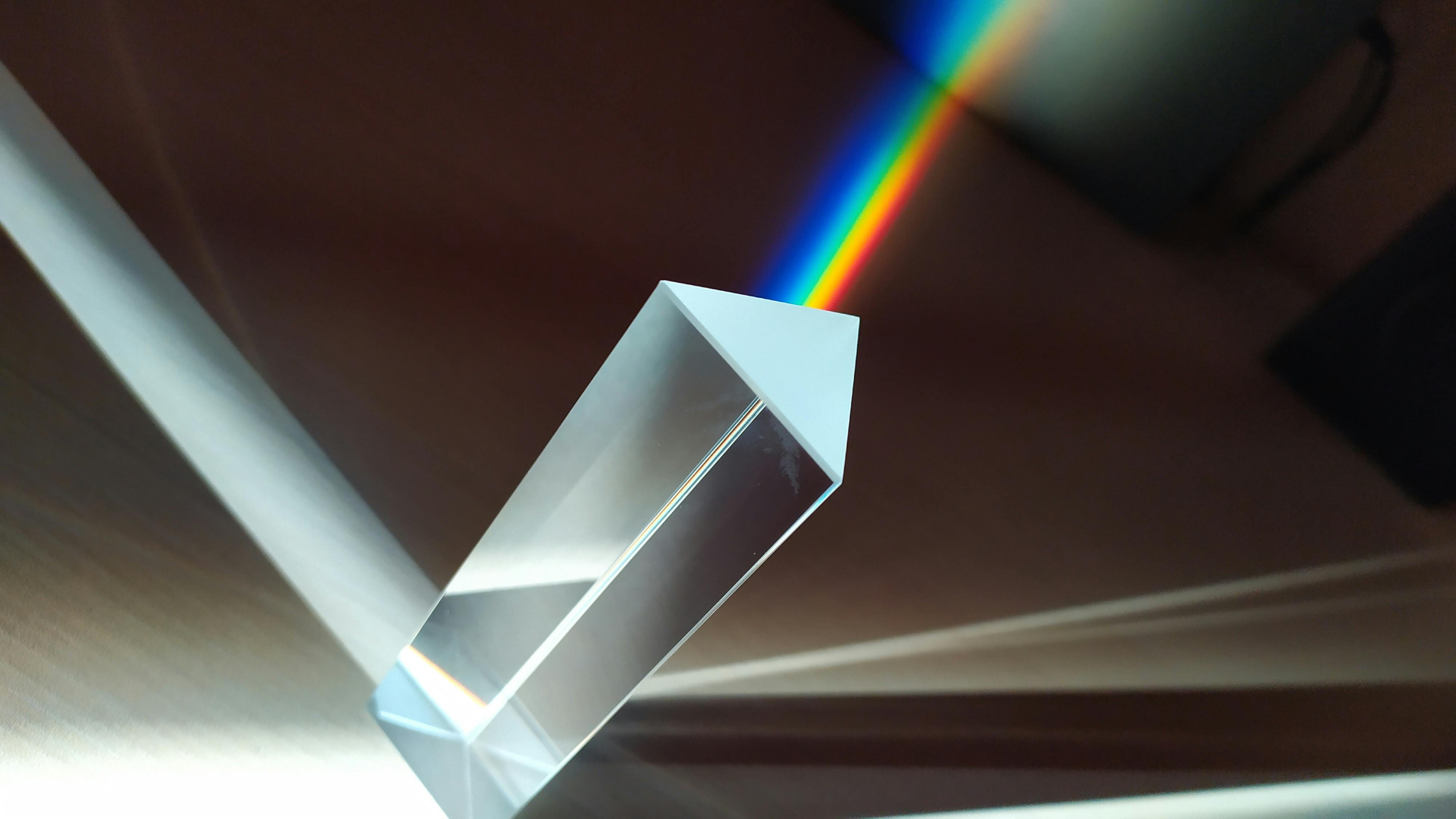
If you’ve been following any news related to autostereoscopic 3D displays, you’ve likely seen the recent headlines about Samsung and Pohang University of Science and Technology (POSTECH) unveiling a metalens that can switch between 2D and 3D on a phone display.
Depending on where you got your information, this might sound like something that wasn’t possible before. That’s misleading as switchable lens technology has existed and been showcased for more than a decade. Multiple papers have been published, and patents filed, on this very topic.
That said, applying it to a phone may not be the most obvious or appealing use case. Adding an optical filter plus the electronics to control it introduces significant thickness and weight. On a monitor, that’s probably fine. But move to laptops or mobile devices, and the problem grows exponentially.
What Samsung and POSTECH are (as far as I can tell) the first to demonstrate is a meta-optical system capable of switching between 2D and 3D. That’s genuinely impressive, and that’s why they have been published in Nature, but let’s keep it in perspective. I personally looked into using metamaterials for autostereoscopic displays years ago, and while I thought it might work, I also realized it was unfeasible at our scale. Looking at what this collaboration involved, it seems like it was even harder than I imagined, which, as often happens in science, turned out to be the case.
So let’s put on our skeptical scientist hats and dig into the technology. Because while some claims may be exaggerated, this is genuinely a cool step forward, and one that could open up a new display paradigm and solve several long-standing problems.
Metalenses explained (without the physics PhD)
I assume you didn’t came here for a long physics lecture from me, so here’s the accurate, no-hype version.
First, we need to understand the concept of a metasurface: imagine a very thin sheet of material like silicon or glass, but covered with millions of very tiny pillars. They’re so small they’re measured in nanometers, each one much smaller than the wavelength of light. These pillars are not just random, but they are arranged in a specific pattern.
When light passes through the metasurface, each pillar bends it just a tiny bit, similar to how a pencil in a glass of water looks like it bends, but at the nanoscale. By carefully designing the size, shape, and spacing of these pillars, engineers can control exactly how light bends, reflects, or twists as it passes through.
A metalens takes that same concept and applies it to focusing light, replicating the behavior of traditional lenses. The pattern of tiny pillars on a metalens is arranged so that light hitting the edges is bent more than light hitting the center, bringing all rays to a single focal point. This is exactly what a curved glass lens does, but the metalens is flat and can be thinner than a piece of paper.
What Samsung and POSTECH have demonstrated here is not just that they can manufacture such a metalens (already not straightforward), but that they can apply it to autostereoscopic displays and make it switchable, that is, they can enable or disable the optical effect using an electrically activated polarization control.
Moving beyond the lab
Enough with the physics lecture, and more to the application in the real world.
While making refractive lenses like the ones in cameras, glasses, telescopes, and so on is quite well understood, making them powerful has real limitations. Traditionally, the only way to build a powerful optical system was to stack many lenses. That’s why telescopes use combinations of lenses. The development of Fresnel lenses helped by allowing large apertures and short focal lengths with less material, which is why they’re used in lighthouses and VR headsets. Regarding headsets, these days, pancake lenses are taking priority because they’re lightweight and introduce fewer visual artifacts and still provide a way of making powerful lenses.
A metalens solves a core problem because it’s extraordinarily thin. Even though I’d argue that the reported 1.2 mm thickness is comparable to what you can do with more traditional lenticular arrays, here’s the kicker: there’s currently no way to get a lenticular array that operates effectively beyond about 20 degrees. (Samsung claims 15 degrees is the limit, but I disagree with that value.) The fact that a metalens can achieve anywhere near 100 degrees shows how much optical power you can pack into the same thin profile.
That’s the part that actually matters, and yes, it’s very impressive.
But before we get too excited, we need to cover how an autostereoscopic display actually works because this is often poorly explained and can lead to misunderstandings.
The quoted maximum viewing angle of 15 or 20 degrees is per individual viewing section (also called a viewing cone). That doesn’t mean there’s no light outside that viewing cone, just that the same pattern/content repeats . And that’s not necessarily terrible. The real problem is what happens between these cones: when you move from one cone to the next, the views become a jumbled mess. Filters and clever tricks exist to make that transition smoother and less noticeable, but the problem never fully disappears.
Important clarification: If you’ve used a single-user tracked autostereoscopic device and wondered why the viewing angle feels much larger, it’s because slanted lenticular systems can dynamically move these cones. Using eye-tracking, the device shifts the viewing cone to follow you. Instead of you finding the sweet spot, the sweet spot finds you, which gives the impression of a very wide viewing angle range.
The math of sitting on your couch
Let’s do a quick calculation.
Say you have a display with a viewing angle of 20 degrees per cone. That means, as we mentioned early, that every 20 degrees, the pattern repeats. So if a group of people is looking at the display, they each need to position themselves inside one of those cones.
This is not an impossible feat, but here’s the problem for the consumer market: we don’t watch 2D displays that way. Nobody walks into their living room, looks at their large TV, and searches for a specific spot where the picture finally looks right. Instead, we find a comfortable spot on the couch, then look at the TV.
But if you make that cone 5 times larger, like say, 100 degrees, you’re in a completely different situation. One that starts to feel comparable to a regular TV or monitor.
Sure, today’s best displays offer viewing angles up to 178 degrees. But let’s be honest: how many people watch TV from the extreme corner? As a general use case, almost nobody. And again, light doesn’t disappear outside the cone, the image just repeats, though quality may degrade significantly.
So here’s the exciting part: if we can populate a full 100-degree viewing range with a bunch of distinct views, we suddenly have a legitimate way for multiple people to watch autostereoscopic 3D content the same way we watch regular 2D displays.
That, right there, has been the overpromised holy grail of stereoscopy for nearly 200 years.
There are still open questions, of course. For example: how cleanly can you define each view? In traditional lenticular systems, you can maintain 2 fully independent views, minimizing crosstalk (ghosting). With three or more views, there’s always some overlap, which is why multiview systems often feel “blurry.” (That blur can actually be used creatively, like making a product appear to float, but it’s still a limitation for general purpose use cases)
On the other hand, if these systems allow for such a large number of views, the overlap problem may not matter much.
The team lead at POSTECH notes: “For commercialization, we need to address issues such as repeatability in mass production, demand, higher resolution, and improved transmittance. Current metalenses do not transmit 100% of light, so the screen may appear somewhat blurry; if this is improved, brightness and sharpness can be enhanced.”
That’s entirely expected, and most reporting conveniently leaves these remarks out. These are early-technology problems, not dealbreakers. Manufacturing challenges are obvious, and frankly, scaling this from a prototype into something repeatable will be a tough problem that could easily take years of research and development.
Here’s also another point that pro-hype media leaves out: processing power. It is really not clear how will the display get enough processing power to generate a huge number of views, especially in real-time rendering? At first glance (and I could be very wrong here), I’d imagine using a 2D + depth map approach. You simply can’t generate an absurd number of high-resolution views and stream them live. Even pre-rendered content sometimes struggles. That said, companies like Looking Glass Factory claim to use 45 viewpoints, and super-multiview systems aim for 64 or more. Many companies have demonstrated frequently that they can run successfully once pre-rendered correctly.
Bottom line: cool science, reasonable expectations
So, is this coming to a store near you anytime soon?
No. It isn’t.
And that’s my biggest problem with the reporting, the deliberate implication that this is almost ready for your pocket. But even in the abstract of the Nature paper, the authors themselves state clearly:
“These results highlight a promising solution for next-generation display technologies in both consumer electronics and commercial applications.”
That’s honest. That’s accurate. And it sets the right expectations. So why do outlets overhype it? Clicks, probably. But it does a disservice to real science and technology.
That said, this is still really cool to see.
Stereoscopy in general, and autostereoscopic displays in particular, desperately needs novel approaches to display technology. And while I would argue (and, to be honest, kind of bet my professional career on the fact) that current technology is capable of more than it’s being used for, there’s still an absurd amount of room for improvement.
Seeing advances like this? It makes me optimistic, cautiously, and with my skeptical scientist hat still firmly on.