

Optical Illusions vs. Autostereoscopic 3D Displays
Or, Why True Depth Matters.

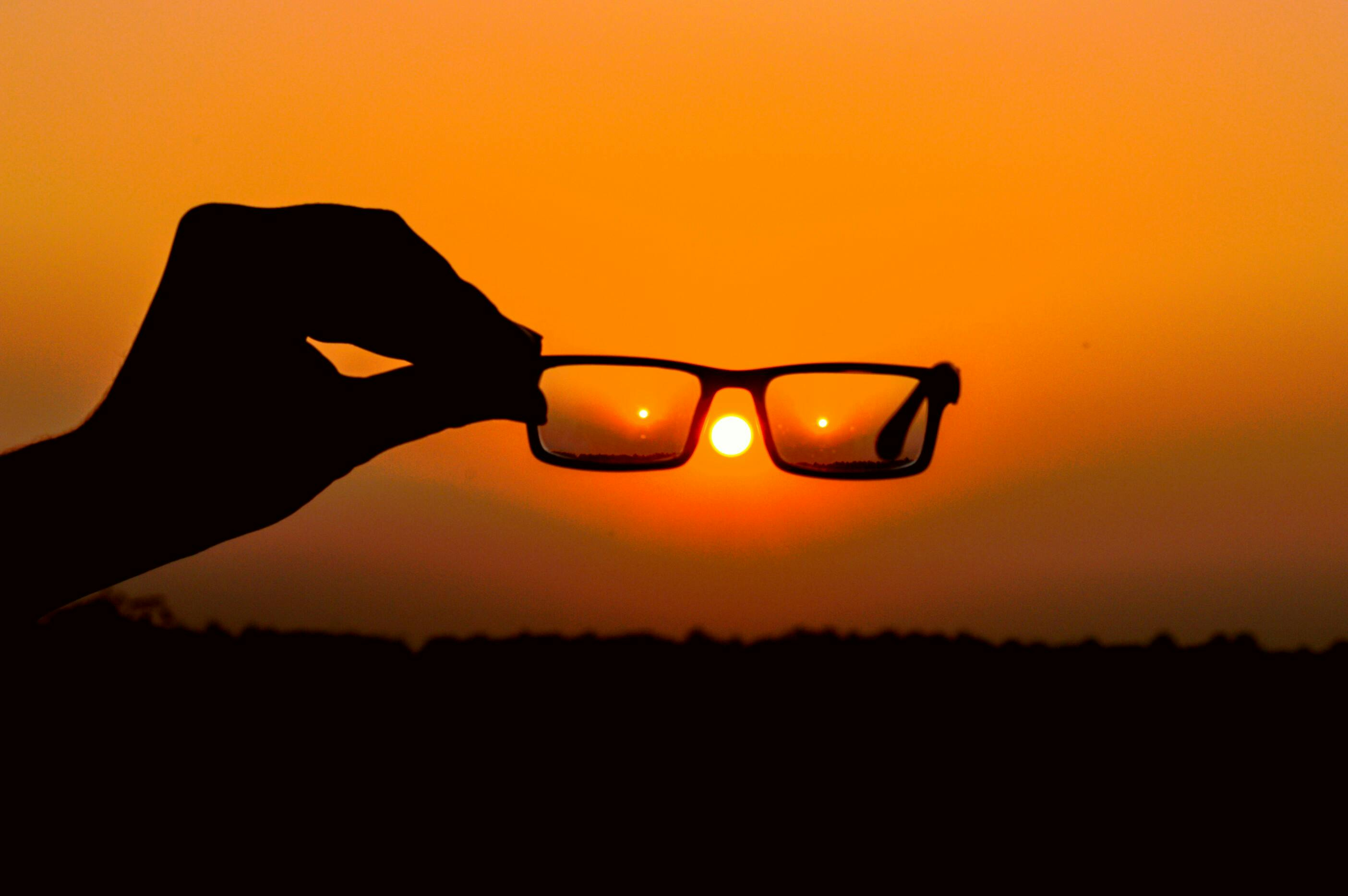
Have you ever seen a photo where someone appears to "hold" the Leaning Tower of Pisa like a tiny souvenir? Or spotted a face in the clouds—or even on Mars? These are classic examples of optical illusions: the first is forced perspective, tricking depth perception, while the second is pareidolia, where our brain imposes familiar patterns on random shapes.
Both illusions reveal how our visual system can misinterpret reality, after all, the real Leaning Tower stands over 55 meters tall, and Mars (despite viral images) doesn’t have carved faces.
These tricks often work best in 2D images, where monocular depth cues (like relative size or perspective) can be manipulated. But when you introduce true 3D vision with stereoscopic depth and motion parallax, many illusions fall apart. In this post, we’ll explore how these illusions work, why they fail in autostereoscopic displays, and when "seeing the truth" in 3D becomes a critical advantage.
What Are Forced Perspective and Optical Illusions?
Forced perspective is a technique that manipulates human depth perception by carefully arranging objects, scales, and viewpoints to create deceptive spatial relationships. Like in the case of the Leaning Tower. Optical illusions, more broadly, trick the brain into perceiving something that doesn’t match physical reality. Pareidolia is one example, but there are quite a few more.
These have been used a lot in arts and entertainment. You can take a look at the following examples:
Superliminal (Video Game): This puzzle game plays with forced perspective by allowing players to resize objects based on their distance from them. For example, pick up a small cube, hold it far away, and it becomes gigantic when placed down.
Ames Room (Real-World Illusion): A distorted room where people appear to grow or shrink as they move across it, thanks to clever angles and a single fixed viewpoint.
These illusions work because when looking at 2D content, like a picture or a video, our brain relies on monocular (single-eye) depth cues (relative size, perspective, and occlusion) to estimate distance and making sense of what we are seeing. When these cues are artificially manipulated, our perception is fooled.
Why Autostereoscopic Displays Don’t Suffer from These Illusions
Autostereoscopic displays (glasses-free 3D screens) provide true binocular depth cues by presenting slightly different images to each eye, mimicking natural human vision. While you could argue that all 3D displays are optical illusions (since depth is simulated), forced perspective tricks don’t work the same way in stereoscopic 3D.
There are a few reasons for that:
Binocular disparity overrides monocular tricks: Forced perspective (and the Ames room) relies on a single viewpoint, but with two eyes, the brain detects inconsistencies in depth, quickly. You can read more about this effect in a previous post from me:
Motion parallax enhances realism: Many autostereoscopic displays adjust perspective as you move, making it harder to "trick" the viewer with static illusions. Interestingly, this creates a unique optical illusion in stereoscopic 3D displays: When viewing pre-rendered 3D content, there's no actual motion parallax data because both eye images are fixed. Yet as you move your head side to side, you'll perceive a subtle sense of depth movement (or parallax). This happens because your brain expects parallax when seeing in 3D and moving, so it fills in this missing information. You can test this illusion yourself: move while watching 3D content, then close one eye. You'll notice the image remains static, revealing the trick your brain was playing.
True depth perception prevents scaling errors: Unlike in Superliminal, you can’t resize an object just by moving it closer because its depth is consistently perceived. In practice, one of the most frequent challenges users face is setting displays to 1:1 true scale, only to discover large models (like cars) don't fit properly. While 2D displays simply require zoom adjustments, 3D displays demand depth scaling - fundamentally changing how we interact with the content. This represents more than just a technical difference; it requires a complete shift in how we think about spatial representation.

Why This Is an Advantage for 3D Displays
While optical illusions are fun in art and games, they can be problematic when analyzing complex structures. That’s why autostereoscopic 3D displays offer key advantages for visualization and spatial representation:
Better spatial understanding: Architects, engineers, and scientists can examine 3D models without distortion, improving error detection. A classic example occurs in 3D printing preparation. When slicing a complex object into layers before printing, subtle but critical errors (floating geometry, unintended overlaps, or misplaced supports) often go unnoticed in 2D views. These hidden flaws might only reveal themselves after hours of printing, wasting time and material. With 3D visualization, designers can immediately spot depth-related issues that flat screens simply can’t show properly. This spatial clarity becomes particularly valuable for intricate designs with organic shapes or interlocking parts, where a single undetected gap could mean a failed print.
Accurate depth judgment: Useful for medical imaging (e.g., MRI scans), molecular modeling, or interior design. One of the most striking examples comes from interior design, where depth perception plays a crucial role in spatial planning. Many designers report clients struggling to visualize final room layouts from 2D floor plans or even virtual walkthroughs. For example, they might approve a furniture arrangement that looks perfect on screen, only to discover in person that the sofa overwhelms the space or the coffee table sits awkwardly far from seating. This disconnect frequently leads to costly revisions and client dissatisfaction. With autostereoscopic displays, designers can showcase true-to-scale 3D models where clients can intuitively judge whether there's enough clearance to walk around that island counter, if a pendant light will hang at the right height, or if a sectional sofa will actually fit the corner configuration they envisioned. This eliminates the guesswork that plagues traditional design presentations and can save large amounts of time and money.
Reduced cognitive load: The brain processes two images more naturally than interpreting forced monocular cues, which could lead to faster comprehension. The cognitive benefits of stereoscopic visualization are being research by numerous studies in spatial cognition research. When examining complex structures (molecular models, engineering assemblies, or anatomical scans) binocular depth cues appear to enable faster, more accurate spatial understanding compared to monoscopic viewing. Research suggests this reduction in cognitive load comes from the brain processing stereoscopic vision more naturally, requiring less mental reconstruction of depth relationships.
However, the degree of improvement varies by individual factors. We'll explore these findings in more depth in an upcoming dedicated post.
Conclusion: Seeing Beyond the Illusion
Optical illusions and forced perspective remind us how easily our brains can be tricked when relying on 2D cues alone: whether holding up the Leaning Tower of Pisa in a photo or misjudging room dimensions from a flat blueprint.
Autostereoscopic displays cut through these illusions by delivering true depth perception, not as a parlor trick, but as a practical tool: from catching 3D printing errors before they waste materials to helping interior designers communicate spatial relationships intuitively, stereoscopic vision aligns digital content with how our brains naturally understand space.
While flat screens force us to mentally reconstruct depth, 3D displays meet us halfway, reducing cognitive load and minimizing costly misinterpretations. As these technologies advance, one thing becomes clear: in fields where precision matters, seeing the full depth of the problem isn’t just helpful, it’s transformative.